
Writing on the morning of Friday 12th July 2026 at the close of a particularly tough three weeks, when the effects of dominant-hand CRPS have hit hard, and the reality of who’s there for me (and who’s not) has been rammed home, even harder. It’s been a harsh wake-up call, as I’ve come to realise just how little the majority of people around me can – or even want to – understand the reality of living with CRPS in my dominant hand.

Not everyone, of course. There is a core group – my husband, a nearby friend and a (not so nearby) fellow CRPS warrior (hoorah for video calls!) plus a few enlightened work colleagues. They’ve seen me at my worst (and also at my best). They’ve taken the time to listen. They’ve read the information from specialist CRPS support services. And they’ve even gone that step further, googling CRPS for themselves in an effort to learn more. They notice my ups and downs and ask those key (but basic) questions: how am I, what do I need and how can they help?
These people make living with CRPS (for the most part) bearable.
And then there are others. The crucial few who simply cannot – or do not want to – acknowledge the reality of CRPS (especially my CRPS). ‘Faking it’. ‘Milking it’. ‘Victim mentality’. ‘You’ve just got to stop this!’
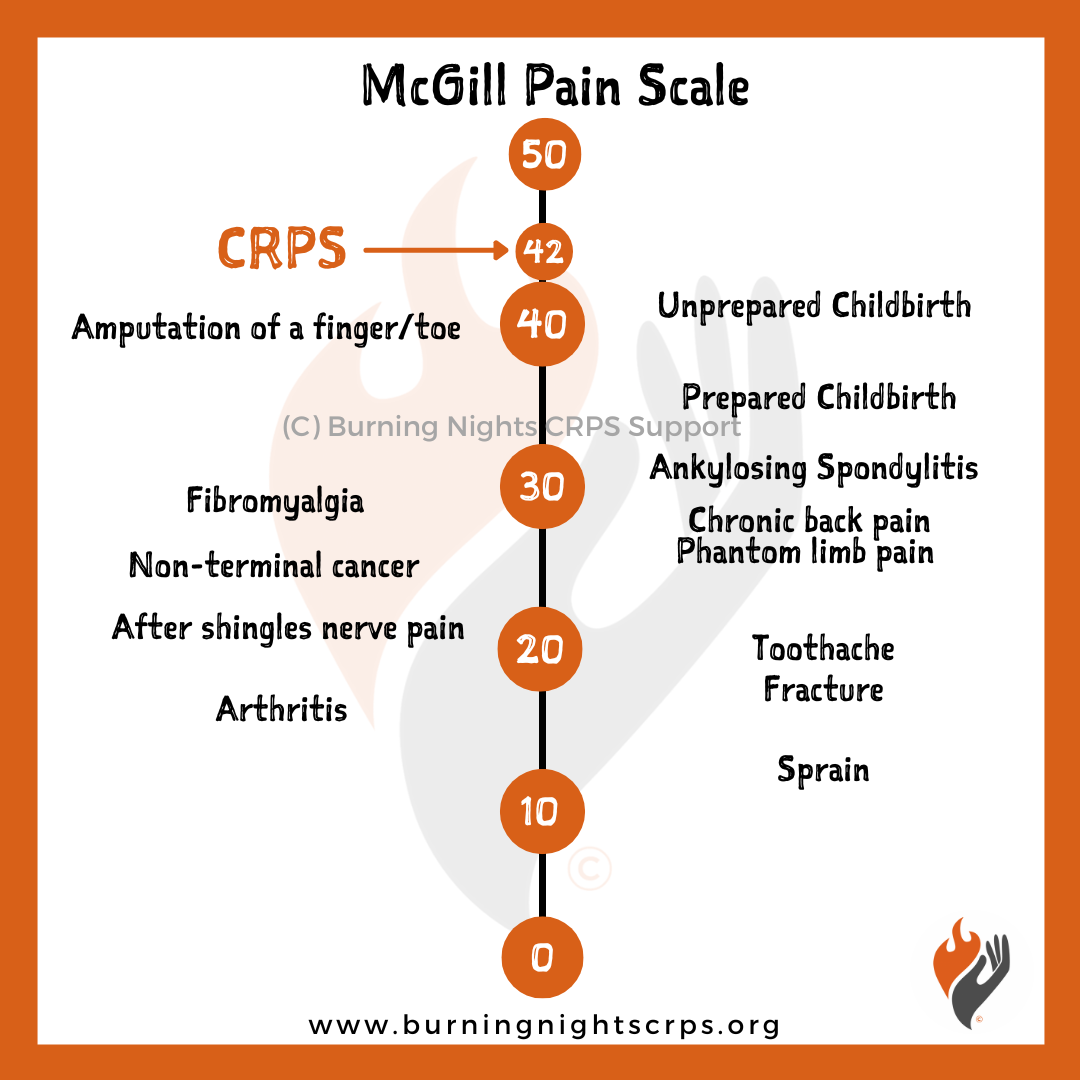
These are the people who may one day finish me off. CRPS is known as the most painful and life-limiting of all chronic pain conditions, scoring around 42 out of 50 on the McGill pain scale (a clinical tool used to measure pain). The clue really is in the name. Complex (complicated) Regional (affecting different parts of the body) Pain Syndrome – (a set of correlated symptoms). CRPS lowers life-expectancy by an average ten years, due to it’s wider health implications, and, contrary to general assumption, those of us living with CRPS are not ‘making a fuss about nothing’, attention seeking or just plain weak and whingey – in fact, the exact opposite: we are tough as old boots, persevering in adversity, pushing ourselves beyond reasonable limits, day in, day out. Support networks are crucial: holding us up or pummelling us down.
Sitting between these two extremes is the general majority, vaguely grasping that CRPS is some sort of ‘disability’ but not quite understanding how or why (well, she looks ok and sometimes she can use her hand but then at other times she can’t … it’s just so confusing!)’ – but never quite taking the time to find out more.
With this in mind, I will here try to explain it (for anyone who might care to hear it).
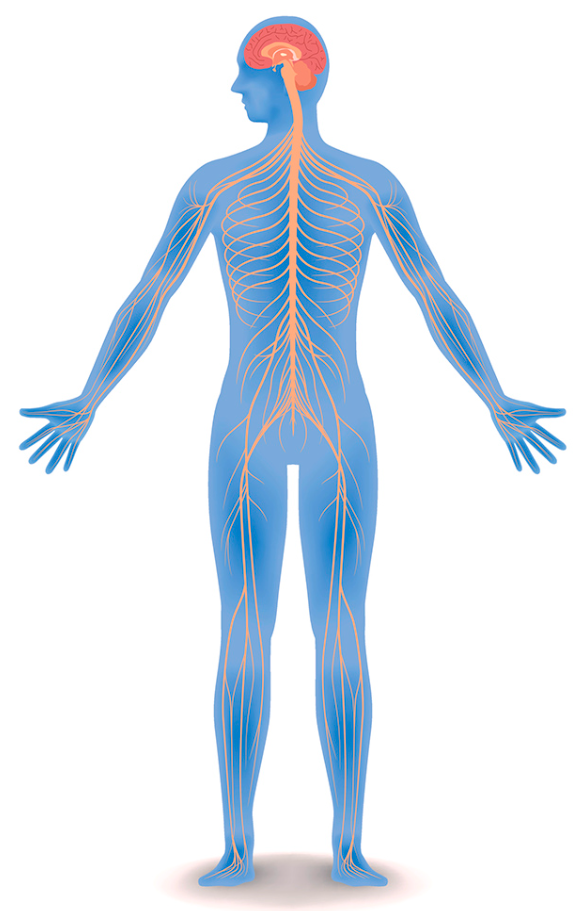
CRPS is a neurological condition: a dysfunction of the nervous system (the body’s central communication highway, controlling ever aspect of bodily function). It is most often caused by an injury or surgery. The exact mechanism is not understood, but for some reason the body continues to register ‘pain’ long after the injury has healed. In my case, a crush injury to the index finger of my dominant – left – hand. My CRPS pain is primarily located in that left-hand index finger, but is not confined to that finger alone: instead it radiates through that finger into the hand, across the palm into the wrist, arm, elbow, shoulder, neck, accompanied by an array of wild and wacky whole-body symptoms interplaying all day, every day. And that word ‘pain’ is such an utterly inadequate descriptive for the relentless cacophony of varying symptoms bracketed under that one insufficient four letter word – ‘pain’.
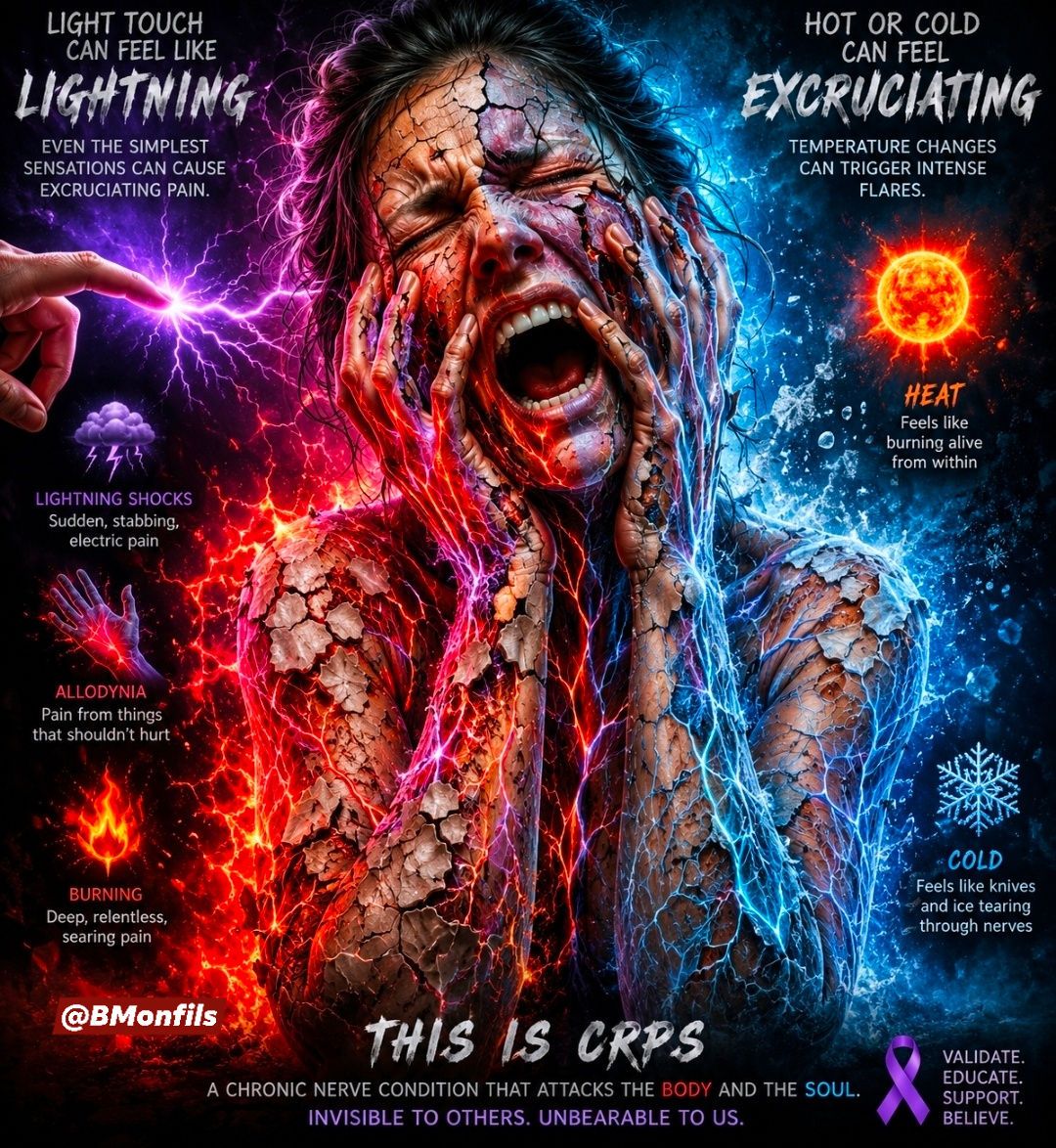
If I were to create a CRPS pain-simulator, enabling others to experience the day-to-day reality of living with CRPS in my dominant hand, it would begin with a sheet of jagged coarse-grain sandpaper encasing that main left index finger, with a thousand rusty pins piercing the entire length of that finger and a cluster of ultra-sharp electrically-charged needles stuck into that fingertip: every movement, every touch causes the sandpaper to scrape up and down the entire length of that finger as the electric-shock pins & needles prickle and fizz in/out/up/down, pulsating from that main finger across into the others and down into the palm, which itself feels always tight and heavy, as if bound with thick rubber bands, restricted and weak. There would also be fire and ice, alternately searing hot and freezing cold from somewhere deep within the muscles, bones and joints of the hand itself yet also blasted onto the skin from some external invisible source, as if a heat gun and ice machine were set together at full power, shooting directly at that main CRPS finger, which also itches deep down to the bone, where it cannot be scratched …
This is the baseline ‘background noise’ of CRPS in my dominant hand. All day and all night, seven days a week, month in month out, year after year. It never stops. Yes, it can and does fluctuate: sometimes ‘quieter’ / sometimes ‘louder’ / sometimes tolerable / sometimes unbearable: but it is always there …
And that is not all …
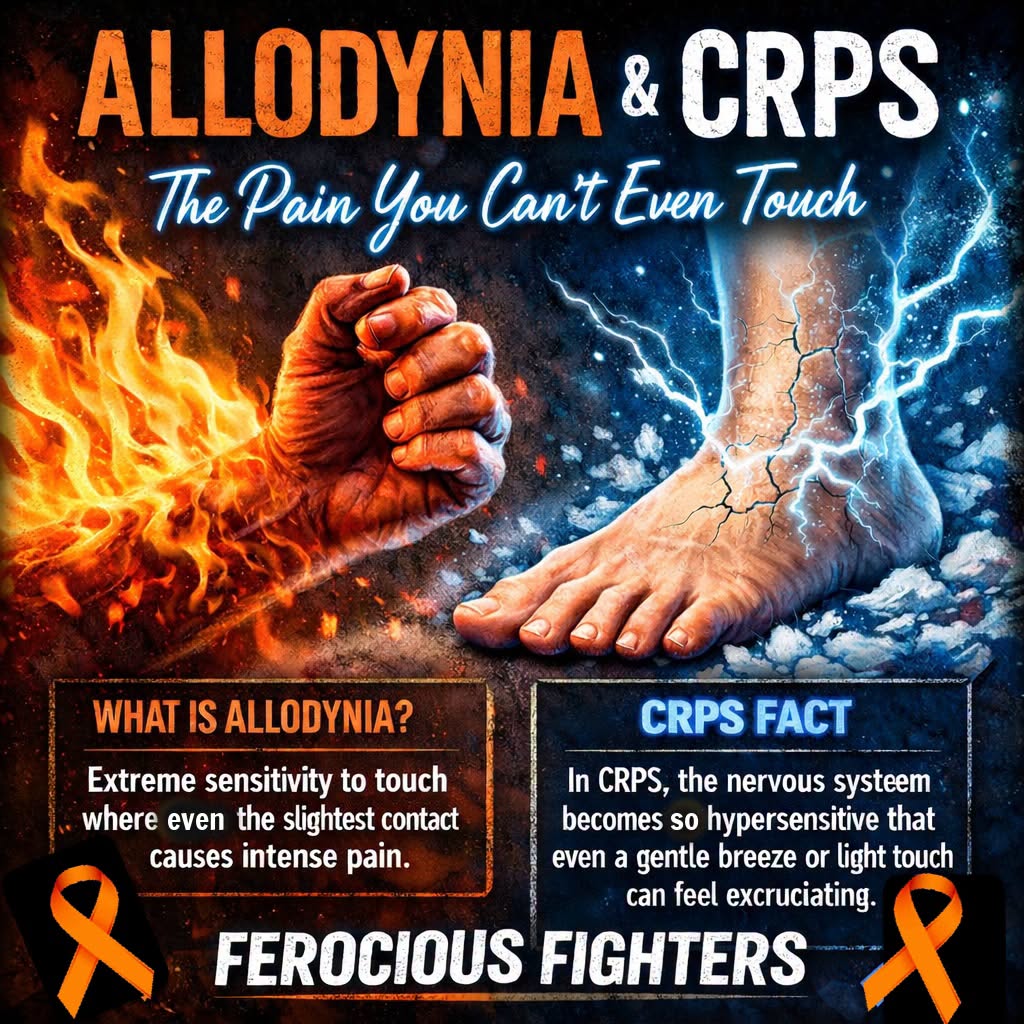
Sensory input in that hand also is jumbled (for example, touching something hot can feel cold / vice versa) and the slightest contact of anything against that finger triggers a neuropathic reaction known as allodynia, whereby pain is caused by stimulus that would not normally cause pain, and any actual pain is amplified. Additionally, there is dystonia: uncontrollable painful muscle movements, spasms and twitches: this occasionally occurs in my arms and eyes, sometimes also in my feet and legs, but most frequently it manifests within the CRPS main hand itself, usually as a result of me ‘overdoing it’ – and by ‘overdoing’ I mean the ordinary activities of everyday life: anything that requires me to use that main hand, which will randomly decide to fold itself down, fingers-curled-into-palm, giving the loud and clear message: ‘Enough!’ This can happen multiple times in day, or just a few times a week. Eventually the hand unfurls itself, returning to it’s non-normal normality – again, the time-lapse between fold-down to unfurl varies, depending on a myriad fine nuances.
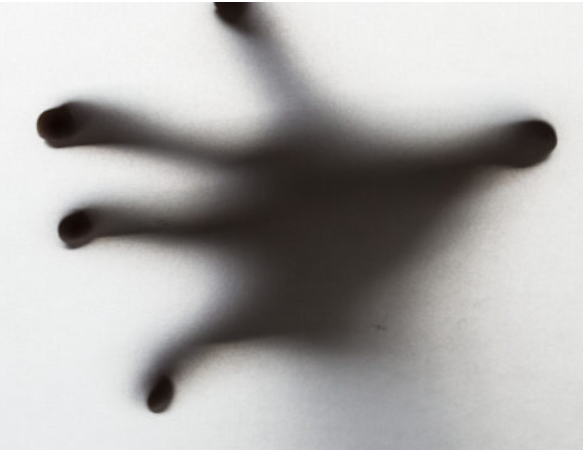
In many ways it is as if the hand is not my own but somebody else’s, or a false hand, stuck onto the end of my arm where my own hand should be, and the communication pathway between that hand and my brain is broken, so that every movement and action requires deliberate focus – willing the hand do what I need it to do – whilst also ignoring the pain sensations that arise as a result of that action. The physical, mental and emotional effort required to simultaneous focus on and ignore the sensory experience of my own body is exhausting.

To understand how problematic this is, just think: how many times throughout a day, and for what, do you use your dominant hand? The simple answer is: everything. And out of that ‘everything’, which activities specifically involve the index finger? Again, the answer is going to be ‘everything’. And the next question: how would you manage if all normal daily action and activity hurt? If all normal daily action and activity not only hurt but was compromised by that hand not functioning as it if were your own? Not just occasionally, but all of the time. And then, if the majority of people around you could not understand or even believe in the reality of these limitations – what would you do?
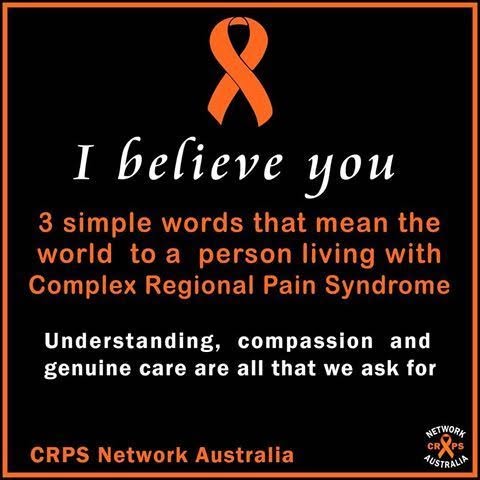
The most likely answer is that you’d find ways to hide it, you’d find ways to work around it, persevering, adapting and ‘pushing on through’- until you couldn’t. At which point you’d find yourself accused of faking it, milking it, seeking attention, playing the victim, being lazy and/or making excuses …
Welcome to the world of ‘invisible’ / ‘hidden’ disability.
Welcome to the reality of living with CRPS.

