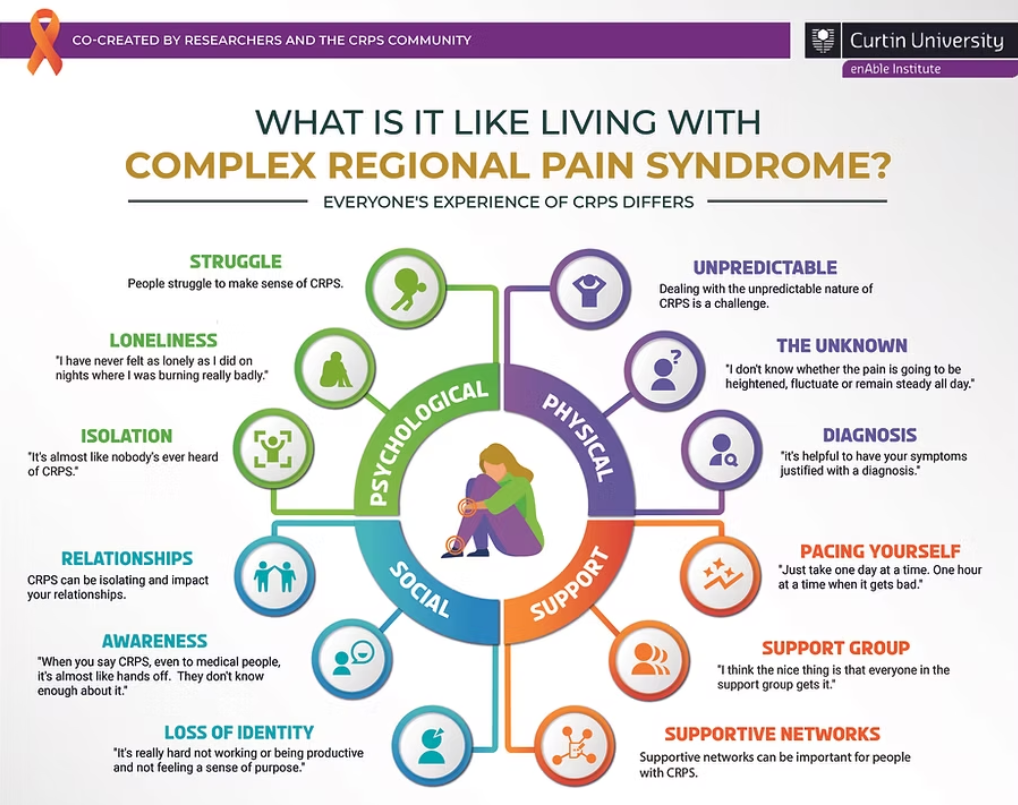
My own CRPS ‘journey’ began in October 2011, and continues fourteen+ years later. But let’s begin at the beginning. It would be great to have an entertaining tale to share, of some daredevil escapade in an exotic location with CRPS as a brave souvenir of exciting times. But no. My CRPS story is mundane, and domestic …
Quite simply, I was rearranging furniture and placed a lamp onto the desk: stepping sideways to loop the wire of the lamp around the back of the desk, my foot knocked the desk-leg causing the desk to lunge sideways, momentarily crushing the index finger of my left hand between the desk-top edge and the wall.
It is here that I must point out: I am left-handed: the index finger of my dominant hand – the main hand that I depend on for everything – was crushed – albeit momentarily – between the top edge of a wooden desk and a granite wall.
Like I said: boring and domestic, but (then aged just 44) devastatingly life-changing.
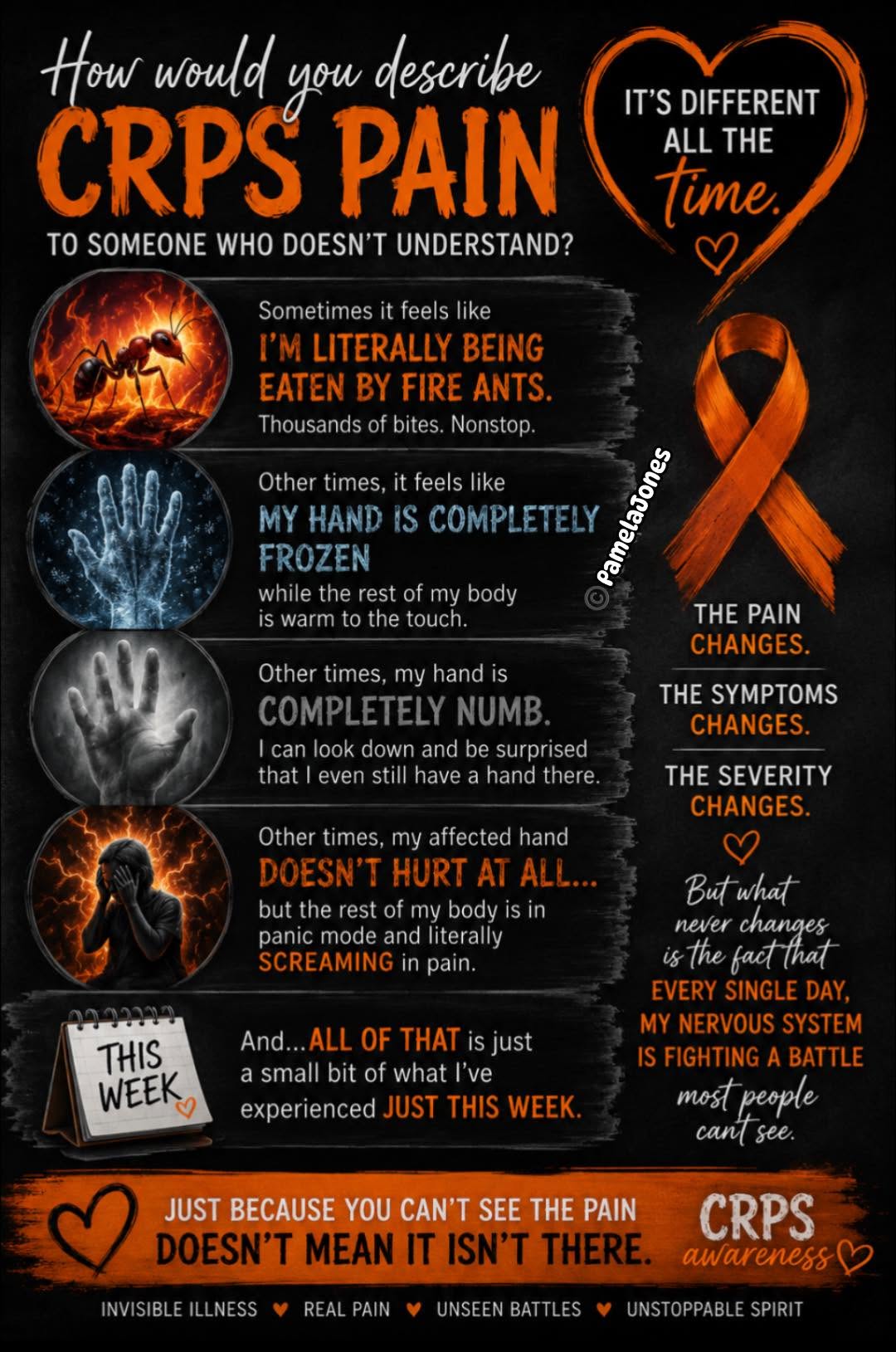
Immediately, the pain was intense. Throbbing, pulsating, hot and cold electric shocks zinging up and down the crushed finger, which simultaneously felt extremely painful and horribly numb, with a crawling ‘itch’ somehow deep inside, down to the bone. There was no blood, no broken skin, no outward indicator of damage. Rapidly, the knuckle swelled and turned angry purple-red spreading steadily up the whole finger and hand, which soon folded itself into [what is best described as] a foetal position, fingertips clamped into palm, whole hand locked tight in a protective fist, rigid and unyielding. Within 24 hours my whole hand and arm had swollen, from fingertips to shoulder, the elbow felt tight, the wrist was weak and aching, and the hand itself remained clamped shut, with a jumble of pain sensations radiating up, far beyond the point of injury. Examination and X-ray at A&E proved inconclusive: no broken bones, no obvious tissue damage. Go home, take pain killers, see what happens. So that is what I did. I carried on. Minimising the effects, hiding the pain, not making a fuss, adapting to use my right (wrong!) hand in the absence of usual function in my usual left (main) hand. Some weeks later, with no improvement, my GP referred me to an NHS ‘hand clinic’ and it was here that I first heard the term CRPS. The diagnosis was given, but nobody explained what it meant. Just a problem with my hand. Just a problem IN my hand. Nobody mentioned ‘dysfunction of the nervous system’ or ‘neurological condition’. Or the potential long-term impact, of what has turned out to be a life-long, life-limiting disability. I was funnelled through a six-week quick-fix course of physical therapy and then discharged with a dismissive: ‘nothing more we can do to help you: you must just learn to live with it.’
So that is what I did.
Here, three points must be noted.
Firstly, l’ve come to realise that most doctors assume that everyone is right handed. I’ve actually had one (NHS neurologist) write in his report to my GP, ‘this lady has CRPS in her right hand’ – paraphrasing my having said to him: ‘CRPS in my dominant hand’. Equally, when they do hear ‘left hand’ it is perceived as no big deal – because everyone is right handed, right?!
Secondly, the misconception of CRPS as being *in* my injured hand, the focus on physiotherapy aiming to open the fingers, forcing my hand to ‘work’, and the ‘learn to live with it’ dismissal. all of this, I now understand, was medical ineptitude, making my situation worse – not better.

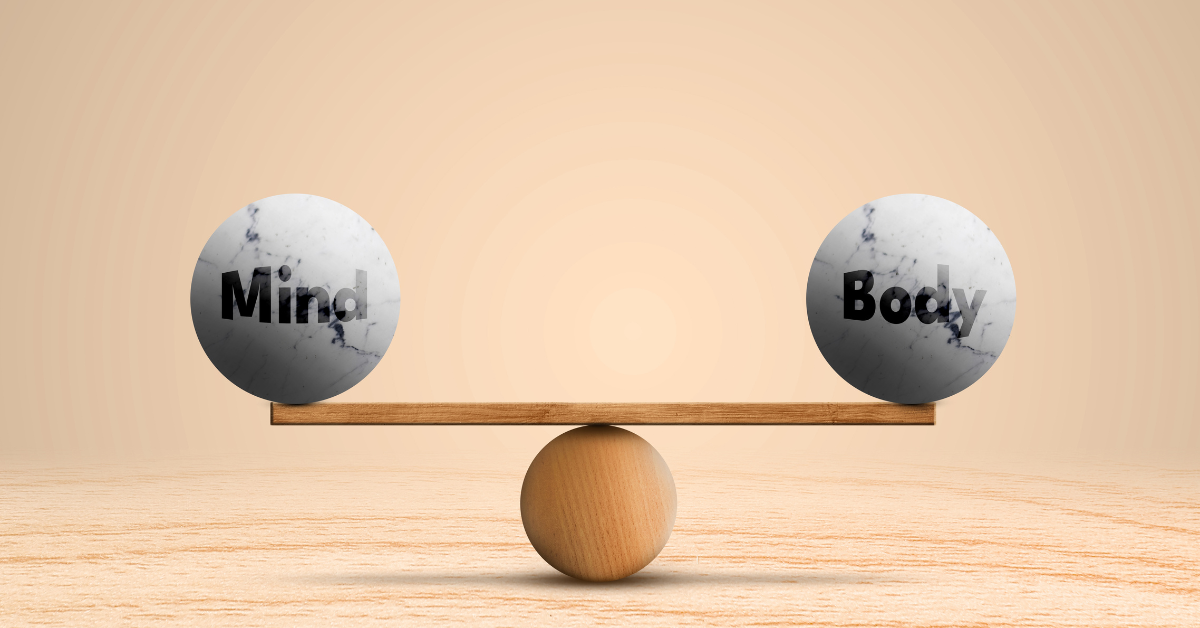
Thirdly, the expectation that doctors know what they’re doing. Many of them really do not. We’ve been trained to trust their God-like wisdom. We hand our health over to their ‘care’, and assume they can – and will – ‘fix’ us ‘for’ us. But the reality is that most doctors are simply following a script, funnelling a patient through a process that matches symptoms to protocols, aiming to minimise or mask those symptoms, without addressing the underlying cause. And they rarely consider the whole person. because the western medical system divides ‘health’ into body and mind, with little overlap between the two. Physical illness focusses on body mechanics, whilst ‘mental health issues‘ are largely stigmatised as a personal and/or moral failing. Physical health is assessed through physical tests, with medication and /or surgery as default solutions. Mental health is not so simple, but the default ‘treatment’ is the same: medication to correct the supposed physiological imbalance in brain chemistry, and/or psychological therapy (counselling) aiming to change how a person thinks, feels and behaves.
CRPS does not fit these reductionist boxes. There is no single clinical test to identify CRPS – it does not show up on MRI scans, x-rays or blood analysis, and is instead diagnosed by something called the Budapest Criteria (tick-box symptoms / effects). There is no one-size-fits-all treatment, because every CRPS sufferer’s experience is different. And the biggest block is that most doctors have never even heard of CRPS – or, if they have heard of it, they do not understand it. Many misinterpret CRPS as hypochondriac attention-seeking – particularly when the sufferer is female. And the reality of of CPRS as a causal factor in future health complications is completely overlooked.
All of this, I now understand … Fourteen+ years too late. But at the time I placed my faith in those medical ‘experts’ and simply did what I was told – ‘learn to live with it’.
And for a while, this sufficed, as I adapted to compensate with my right (wrong!) hand, and found ways to ignore and/or ‘push through’ the pain. I hid the reality of my suffering from everyone – friends, family, work colleagues – denying the truth even to myself.
It was exhausting. Both physically and mentally and emotionally. And the worst approach I could take. Because, CRPS untreated and ignored, only gets worse.
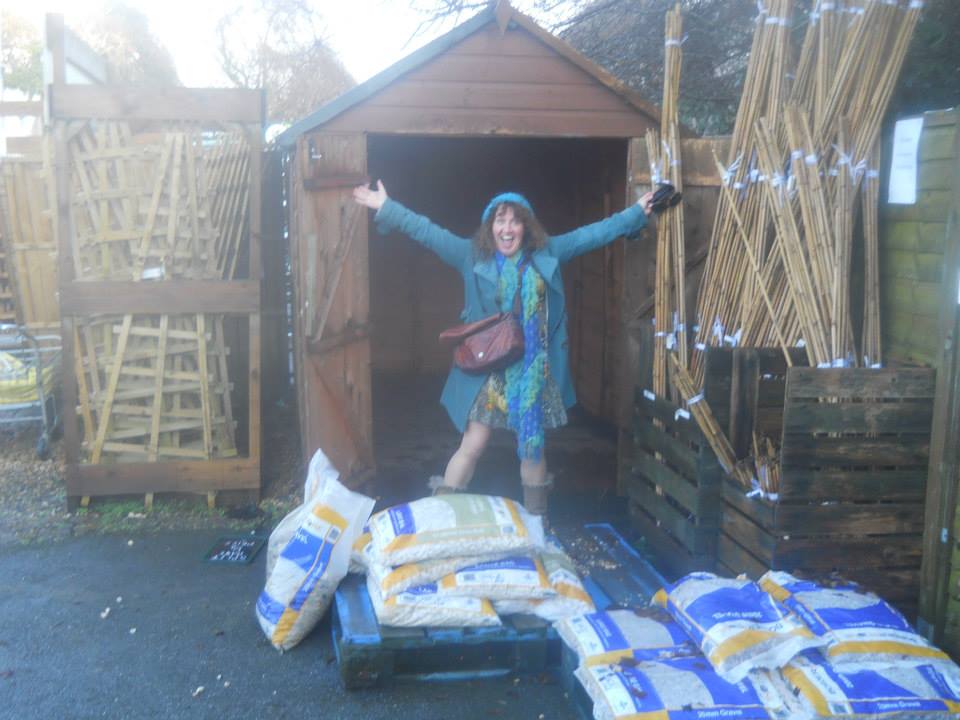
Photographs during this time show me smiling: nobody would have known from my outward appearance, the true extent of my physical pain, the huge effort required to determinedly use my ‘wrong’ right-hand in place of my natural-dominant left hand – or, equally, to continue using that left hand, despite the pain and reduced function. The acting skills required to constantly fake ‘fine’ and ‘normal’. And the longer term impact, not only physically but mentally, emotionally, practically, socially, vocationally and financially, as CRPS steadily chipped away at all aspects of ‘me’.
Time passed. And it was not all bad, for there were periods of remission when those physical symptoms receded, and I’d throw myself into life. But the CRPS always returned, worse than before, bringing new problems on top of the old.
Spring 2014, a ganglion developed at the base of my CRPS finger, for which I was then funnelled through surgery and physiotherapy: my CRPS symptoms became worsen. Yet no doctor made any connection, between cause/effect.
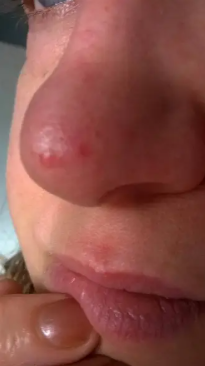
And then, in December 2015, life threw me a real curveball, when a small red dot on the tip of my nose was diagnosed as a basal cell carcinoma (the simplest form of skin cancer) for which the recommended treatment was topical chemotherapy: the same poison that is delivered intravenously for ‘real cancer’ but self-administered at home as a cream applied direct to the skin (twice a day for 28 days) with zero medical supervision: just go home, and get on with it. I wrote about this at the time in a separate blog, venting my frustration at the brutal inadequacies of a ‘treatment’ that (I believe) caused more problems than it solved.
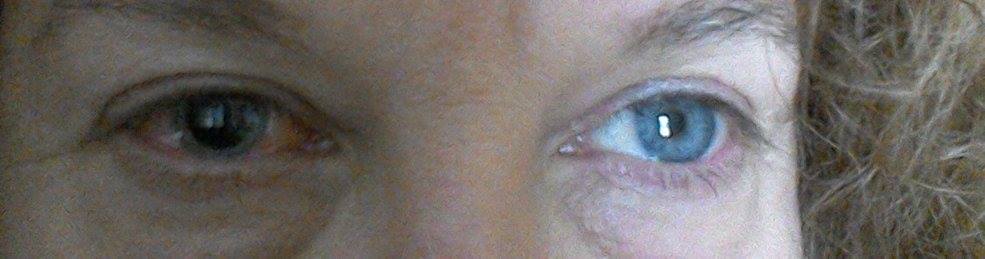
Why do I think this? Because, within weeks of completing that chemo-course, I became ill with an array of mysterious new symptom that were rapidly labelled as fibromyalgia – the dustbin-diagnosis applied when all other options (lupus, MS, ME, rheumatoid arthritis and more) are ruled out. Extreme fatigue, body-wide muscle aches & joint pain, headaches, dizziness, and excruciating photosensitive eye pain with intermittent blindness in my right eye, which would eventually (two years later) be diagnosed as a type of migraine, under the umbrella of fibromyalgia symptoms.
August 2016: My fibromyalgia diagnosis was delivered by rheumatologist: with a bored expression and zero eye-contact, he frizbee’d a leaflet across the desk (Fibromyalgia: everything you need to know) with a dismissive ‘I don’t deal with fibro’ and list of medications that I ‘might like to try’. In his summary letter referring me back to my GP he casually noted ‘her mother has recently died’. He did not mention the recent chemotherapy, or the long-term CRPS.
Meanwhile, the problems with my left hand continued, now with a curious correlation to the photosensitive eye and alleged fibromyalgia – when the hand flared, the eye did too, and vice versa, accompanied by a fluctuating ‘symphony’ of ‘fibromyalgia’ symptoms. Consequently, I spent the best part of the next two years existing in bed, confined to a darkened room, exhausted, overwhelmed and largely dismissed by consecutive doctors – all male – all assuming that I was imagining or making it up. The photosensitive eye pain and vision disturbance were particularly frightening, becoming so bad that I needed to wear dark sunglasses inside the house with the curtains shut, lights off, as the pain seared like a knife, and my vision faded. Ping-ponged around multiple consultants over the coming two years (GP, A&E, emergency eye clinic, ophthalmologists, neurologists)’ their conflicting ‘diagnoses’ ultimately concluded: ‘we just can’t find anything physically wrong..’
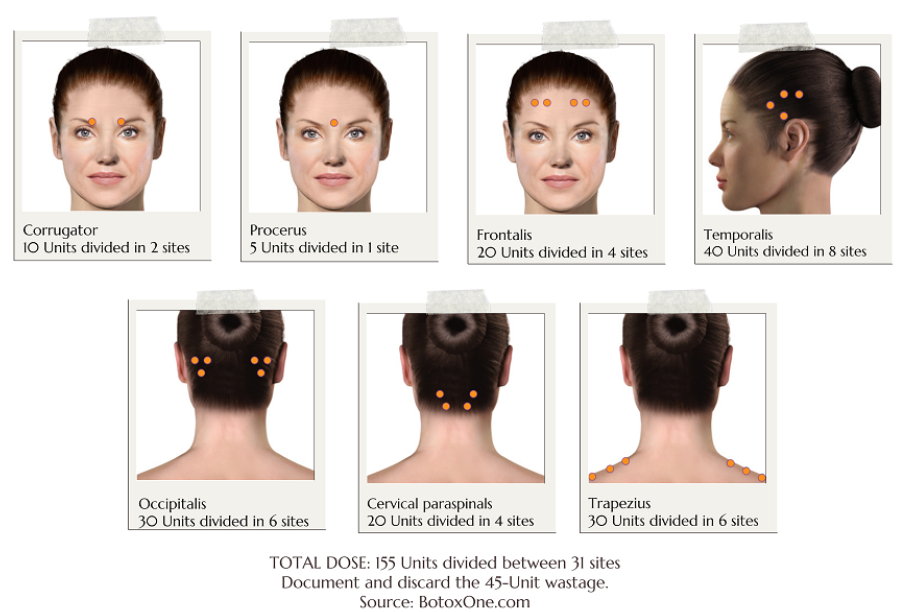
2018. A specialist neurologist offered a new diagnosis: photosensitive migraine, and another new treatment: medical botox. A round-trip of 200 miles enduring 31 injections in my forehead, neck, shoulders and scalp, to be repeated every three months. The injections were excruciating, and their effects torturous. A frozen face and vice-like grip around my forehead, heavy pressure bearing down on the top of my head. The migraines got worse. The photosensitive eye got worse. The ‘fibromyalgia’ got worse. After three attempts I just could not take any more, and elected to stop treatment. Reading up on it afterwards, I learned that a common side effect of Botox treatment for migraine is … photosensitive eye problems … and migraine!?
Throughout all of this – six years since initial onset of CRPS – not one of these ‘experts’ ever looked for links between my various ‘separate’ conditions, and not one of them suggested CRPS as underlying cause. Instead, each new symptom was approached individually, and the increasing problems with my hands were ultimately ‘diagnosed’ as carpel tunnel syndrome, for which I was then funnelled through surgery (February / October 2017) – surgery that I likely did not need and likely made my CRPS worse. It was only after all of this, when symptoms continued most notably in my left hand, that the carpel tunnel surgeon conceded: Oh, well, looks like the CRPS might still be a problem. Would you like me to refer you back to the pain management clinic – see what they can do? To which my response was: Pain management clinic?!? (I’d never heard of such a thing, until now) – How can you refer me *back to* pain management clinic, when I’ve never been there before?!’
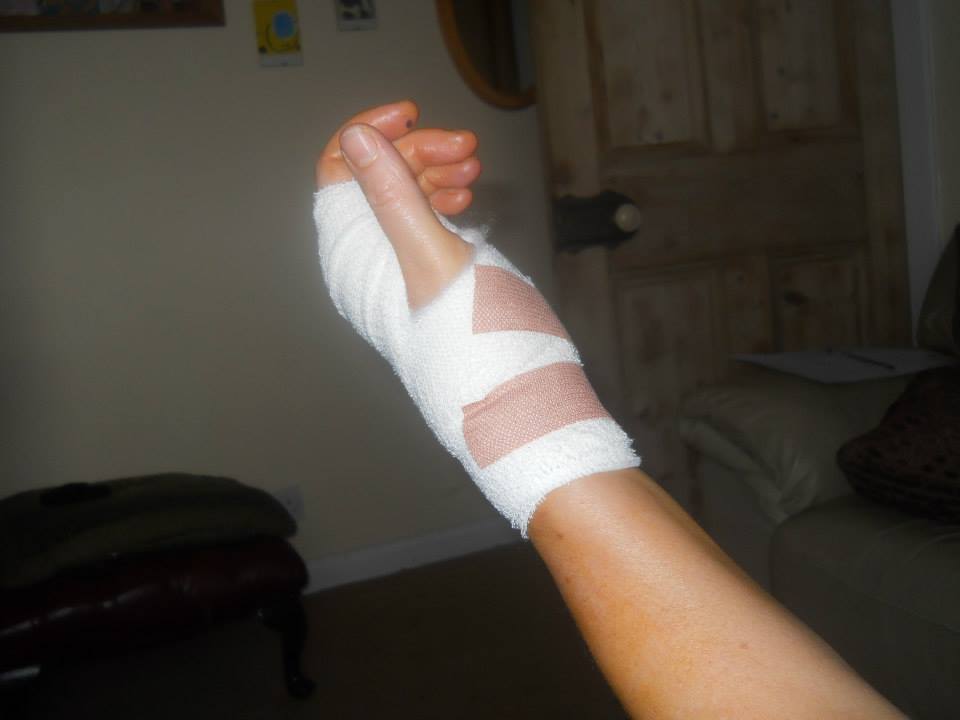
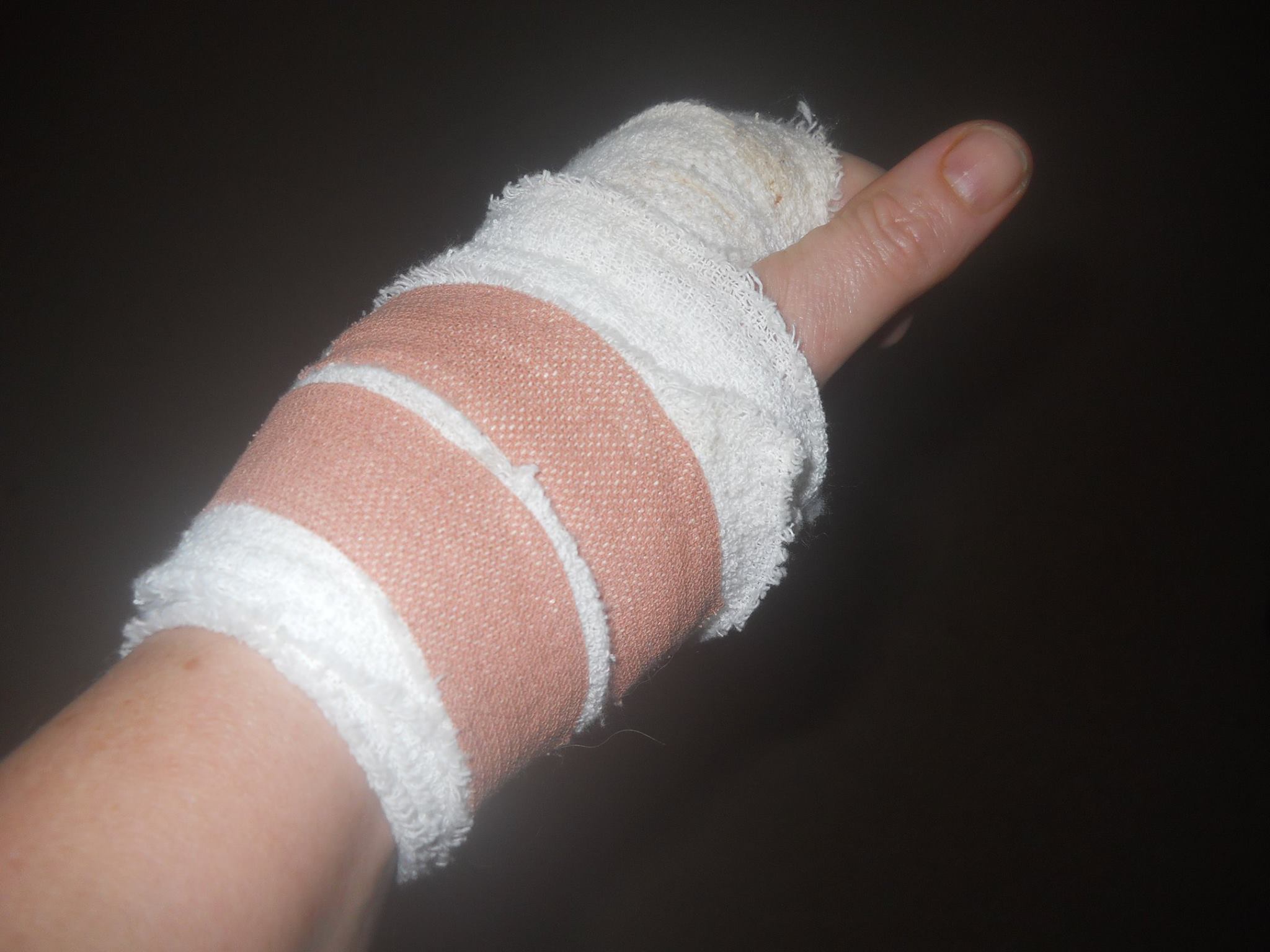
It is at this point that things began to – slowly – change, seven years after initial CRPS diagnosis. Both hands were now problematic: the left had badly deteriorated, increasingly weak and uncoordinated. I was in constant pain, with multiple fluctuating sensations, and the left wrist was now physically smaller than the right, with reduced muscle mass, bone-loss, scrawny ligaments and prominent veins. Aged 51, I was frightened of falling: what if I break my wrist, with it now being so weak?! The fingers would still occasionally swell, and the hand would frequently still fold in on itself, telling me clearly when I had overdone things (this still happens, to this day, and likely always will). And when I say ‘overdone things’ I mean, normal daily activity (washing, dressing, working, shopping, food preparation and domestic chores, eating, drinking, socialising and hobby activities). The right hand also now was problematic (over-use, compensating for my failing main hand), and it wasn’t just about my hands: my arms, shoulders, back, legs, my entire body took the hit, as my overall health steadily deteriorated. Weight gain, stiff joints and weak muscles from reduced physical activity – whereas I’d previously been fit and active, I now struggled with mundane tasks, and could no longer participate in things that I’d previously enjoyed: yoga, walking, running, swimming. I felt and behaved twenty years older than I actually was. And there were other, unexpected complications, which I am only now learning are linked to CRPS – teeth and bone loss, for example.
All of this from a crushed knuckle.
2017-21: It took several months to be referred to the pain management clinic, and several months more for an initial consultation … with the whole process interrupted by Covid lockdowns, bringing ‘treatment’ to a halt before it had even started. I did now do an online pain management course, and from this I began to learn about the brain-body interplay as a key factor in chronic pain, but the focus remained firmly on the ‘fibromyalgia’ diagnosis, with CRPS continually overlooked as a physical problem ‘in’ my hand … None of my physiotherapists, occupational therapists and hand specialists understood about CRPS. And because they did not understand it, they ignored it … And because they ignored it, I did too (whilst sinking deeper into mental and emotional despair, as my physical function deteriorated). Further setbacks came with two road traffic accidents, just fourteen months apart (2022/23, both rear-impact error by the other drivers) causing neck and lower back injuries exacerbating the whole-body effects of the underlying CRPS (which of course now became worse).
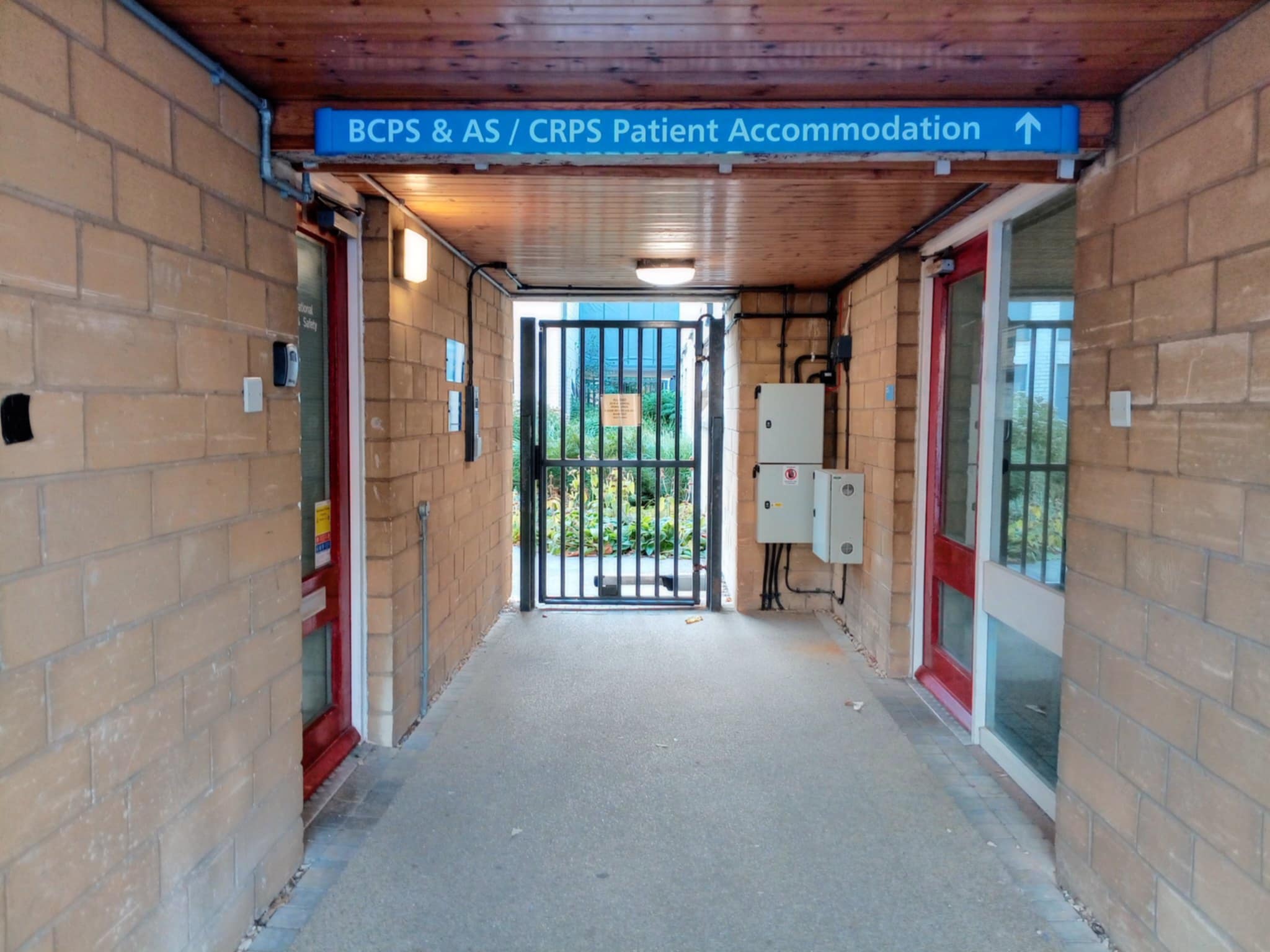
Throughout all of this, no doctor ever mentioned the existence of any specialist CRPS clinics, that may be able to help me. It was not until late-2024 that a hand specialist occupational therapist did a google-search (hoping to find me some better help) and he now stumbled across the specialist CRPS service at the Royal United Hospital in the city of Bath (200 hundred miles from where I live). It is here that I finally received some actual help and support, attending their two-week residential rehabilitation course in August 2025. Here I now learned that CRPS is a neurological condition, a dysfunction of the nervous system (caused by that crush injury to my hand all those years previous): not just a problem ‘in’ my hand, not me attention-seeking / imagining or ‘faking it’ …
All of which brings me to today, sitting here summarising my experience of CRPS, fourteen and a half years in. At the time of writing (6th June 2026), it is ten months since I completed the 2-week residential course at RUH Bath. I am still adapting, applying all that I learned there, and all that I am learning still. It’s an ongoing process, and one that I’ll continue to write about, in forthcoming blog posts.